
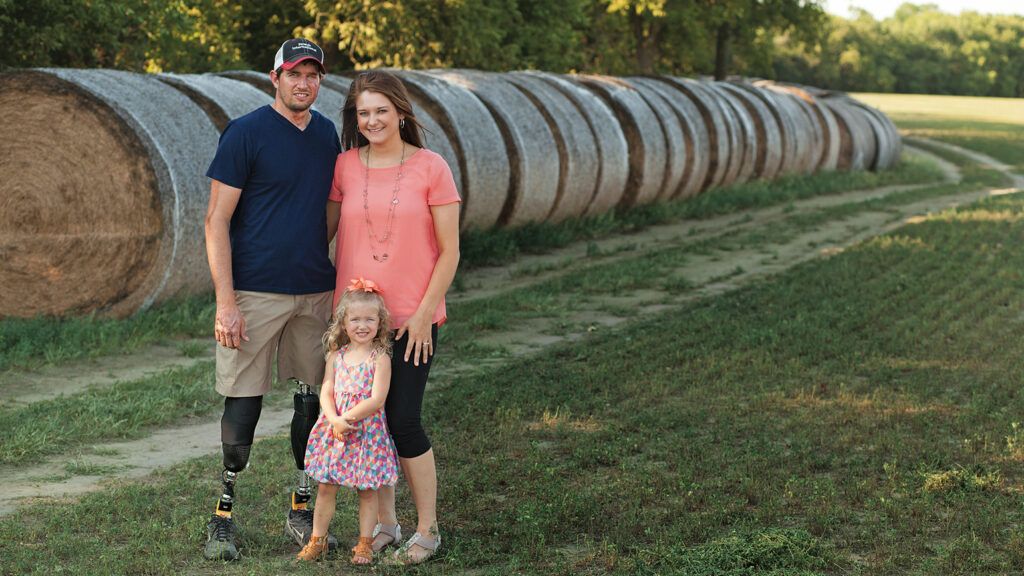
Zach Short: Harvest time. That’s when it gets crazy busy for farmers. We work from first light until dark, not stopping for anything. All that matters is getting the crop in. My family’s been farming for four generations here in Kansas, and I can tell you, it’s not just a job. It’s a life. It’s in your blood, your soul.
 We raise milo, corn, soybeans, wheat and hay. We also run a shop where we rebuild combines, and we use our equipment to harvest crops for other farmers. On that day, October 25, 2014, we’d been hired to cut soybeans. Our friend John Tinkler was in a tractor hitched to a grain cart, unloading the beans into a semi via a tall metal auger.

I was in my combine. Our shop mechanic, Les Ferm, was cutting across the way, when I heard John over the radio. “Tractor’s on fire. Anyone got an extinguisher?”
CHECK OUR SELECTION OF BOOKS ABOUT PRAYER
Jodi Short: It was a little past noon. I’d put our one-year-old daughter, Brynlee, down for a nap, glad to have a moment to myself. I wasn’t used to the pace of harvest yet. I hadn’t grown up on a farm. I met Zach in college. On school breaks, he worked. To see him, I’d have to ride with him in some piece of farm equipment. That’s where we fell in love—in a combine.
I loved Zach’s quiet confidence, his faith that he’d been called to be a farmer. I knew he was the one God made for me. We got married and moved into the family farmhouse, just outside Assaria. Zach’s parents moved into town. A year after our wedding, we had Brynlee. Farm life seemed pretty close to perfect.
Zach: I jumped out of my combine, got in a service truck and drove over to the grain cart. The tractor’s left back tire was on fire. But where was it coming from? John looked underneath the tractor. I went around to check the other side. I grabbed the grain cart ladder with my left hand to high-step the hitch. ZZZZAP! A massive electrical shock. The current pinned me to the cart. There was a flash of white light. Then everything went dark.
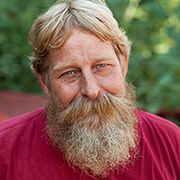 Les Ferm: I pulled up right behind Zach. My eyes went to the auger. It was pressing against a power line. “Zach! Don’t touch—” I yelled. Too late. There was snapping, crackling. Flames shot out of Zach’s head and feet.
I had to get him off that cart, but I couldn’t touch him without getting shocked myself. I checked the service truck. The bed was full of tools. Metal—useless. There. A small plastic shovel with a wooden handle. A friend had found it in the road a few days earlier. Zach didn’t think it was ours, but I’d tossed it in the truck anyway.
I grabbed the shovel, hooked its scoop on his shoulder and yanked. Zach tumbled to the ground and lay there. Motionless. Not breathing. I’d worked for the Shorts for 16 years. I’d known Zach since he was a kid. How was I going to tell his mom and dad he was dead? Then I heard something. A shallow breath.
Jodi Short: The phone rang. Zach’s mom. “Zach’s been in an accident,” she said. “I’m coming to pick you up.” A friend stayed with Brynlee. We rushed to the hospital in Salina. A doctor told us that Zach had suffered a 7,200-volt shock. He’d been conscious and talking with the paramedics. But his burns were so severe, he’d been put in a medically induced coma. “Is he going to live?” I asked.
“I don’t know,” the doctor said. “You can see him for a few minutes. We’ve got to airlift him to the burn center in Wichita.”
Zach was zipped up in a protective bag. Only his face was visible, burned so badly that I barely recognized him. “Hang on, Zach,” I whispered to him. “I love you.”
Zach’s mom drove me home to pack a bag and get Brynlee. In the car, I took out my phone and posted on Facebook: “Please pray for my husband. He’s been in a bad farming accident.”
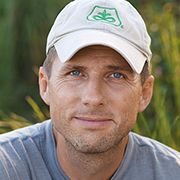 Justin Knopf: I was harvesting when I felt my phone buzz around 3:00 p.m. It was a neighbor texting: “Zach Short’s been injured.” I live in Gypsum, about 12 miles from the Shorts. They’re the kind of folks who are always helping others. Now they needed help. I thought of the scripture “Where two or three of you are gathered in my name, there am I among them.” So I radioed the guys working with me. We climbed down from our combines and prayed together.
I wished there was something more I could do. Later it came to me: What if every day a few of us stopped what we were doing and prayed for Zach at 10:00 a.m. and 4:00 p.m.? As in 10-4, understood. A radio code every farmer knows. A way to think of Zach in the middle of the harvest. I texted a few friends and put something on Facebook.
Jodi: Three days after the accident, Zach was still comatose, clinging to life at the burn center. I was with family in the waiting room when a nurse rushed in. “You need to come with me,” she said. “Run!” We raced to Zach’s room in the ICU. “He’s coding,” the nurse said. A doctor was doing chest compressions on him. I screamed. Nine torturous minutes passed. Finally, the doctor said, “I’ve got a pulse!”
A nurse led me back to the waiting room. Gulping tears, I told everyone what had happened. I wrote on Facebook: “Zach needs prayers. Now!”
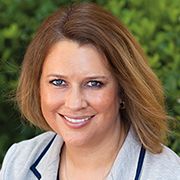 Lori Blake: I was the HR manager at a nonprofit. I was in a meeting with 15 coworkers, including Zach’s sister, Kelsie. Our phones buzzed at the same time. “Stop what you’re doing and pray for Zach!” Jodi had posted.
I’d known Zach since he was little, when I worked at the town gas station. I remembered him, his brother and sister coming in for Cokes. Such great kids. The meeting came to a halt. All of us bowed our heads and prayed.
Jodi: That night the doctor told us Zach had only hours to live. His kidneys were failing, his lungs full of fluid. “We’ve done all we can,” the doctor said. “If he codes again, how do you want to proceed?”
I made the decision to stop forcing air into his lungs, and we put Zach in God’s hands. The chaplain came, a Catholic priest who administered last rites. Family and friends packed the hallway, praying. I sat beside Zach, Brynlee in my arms. “Daddy’s going to heaven,” I tried to explain. The doctor had told me his vital signs would drop slowly and he would pass away. I watched his monitors, waiting.
The hours passed and his numbers didn’t drop. They inched up. Could it be? He wasn’t dying! He was rallying!
By morning Zach’s lungs were clearing. His kidneys were working. “This isn’t anything I’ve done,” the doctor said. “This is God.” I knew we would need many more miracles. More than half of Zach’s body had been severely burned.
On November 6, the doctor asked me to sign a form authorizing the amputation of Zach’s legs. “They’re badly burned and infected,” he said.
How could Zach be a farmer without his legs? I wanted to talk to him about such a weighty decision.
“We can’t wait,” the doctor said. “If the infection spreads, it will kill him.”
I took a deep breath and signed.
Justin: Combines all over the county were stopping at 10:00 and 4:00. Folks in town were praying at the same times. Someone put up a sign at the Assaria city limits asking people to pray for Zach. As a week passed, then two, I found myself lingering longer each time I bowed my head. The harvest could wait.
Jodi: It had been 20 days since the accident. I spent my days at Zach’s bedside, watching for his eyes to open, a finger to twitch. At night I would crawl into bed at a relative’s house. One morning the phone startled me as it rang at 6:00 a.m. I was almost too scared to answer it.
“Zach’s awake!” the doctor on the line told me. “He’s asking for you.”
I got to the hospital as fast as I could. But I didn’t know what to tell Zach. “Jodi, why are you acting so weird?” he asked.
“You’ve been in a bad accident,” I said. “I was worried you wouldn’t even know who I was.”
“I would never forget you,” he said. “Or Brynlee.”
Lori: The day Zach came out of his coma, God’s praises were sung and many people found ways to help. Jodi’s sister started a GoFundMe page and donations poured in. A bucket was passed at home football games. I’d volunteered to help with a spaghetti dinner and auction. Farmers donated equipment and services for the auction—things folks here really value, like a cattle guard and hay grinding. Jordy Nelson, a star receiver with the Green Bay Packers, who grew up an hour away from here, donated a signed jersey. Jordy Nelson!
Zach: Two days after I woke from the coma, Jodi still seemed nervous about something. “They had to take your legs,” she told me. “You would have died otherwise. They say you’ll be able to get prosthetics.”
I looked down at the bed sheet. It lay flat where my legs should have been. That didn’t seem real. Not as real as the pain. My body felt like it was on fire. Not just on the outside, but inside my muscles and bones.
Jodi: I was so relieved he wasn’t devastated about losing his legs. I couldn’t bring myself to tell him the doctor was talking about amputating the arm he’d grabbed the grain cart ladder with. The electricity had ripped through his arm and shoulder, burning him from the inside out.
“Can you try to move your left arm?” I asked. Zach grimaced, gritting his teeth. Ever so slightly his arm moved. I wanted to scream for joy.
Zach: That tiny movement was the start of a long journey. Next I went to Barnes Jewish Hospital in St. Louis. Surgeons there operated on me more than 20 times, removing damaged tissue, then reconstructing tendons and muscles, grafting skin.
I found myself growing depressed. My limitations were becoming all too real. What good would I be, hobbling around the fields on prosthetics? Trying to climb up into a combine and falling?
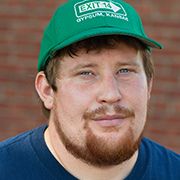 Alex Weller: Zach and I were roommates freshman year in college. I was a lot less motivated than he was. He made me go to class. I never would have passed without him. Never would have gone on to become the owner of Exit 14 Restaurant in Gypsum. As soon I heard about the spaghetti dinner and auction, I signed up to supply all the food. Helped organize everything that went into it. We served more than 700 meals and raised $70,000 for Zach. Volunteers wore T-shirts that I designed. “Nothing short of a miracle,” they read. It really felt that way. We’d all been part of something life-changing.
Jodi: From Barnes, Zach went to University of Kansas Medical Center for five weeks of rehabilitation. On Valentine’s Day, we finally headed home. We exited I-35 at Assaria. At the end of the ramp, a police car was waiting to escort us. Cars and people were lining every inch of the overpass. Along the main drag, we saw even more folks. “What have you been up to?” Zach asked me.
“It wasn’t my idea,” I said. “Everyone wanted to welcome you home.”
Now I understood what it meant to be part of a farm community. People had been there for us every step of the way, making sure our fields got harvested, supporting us financially and in prayer. I knew they’d be with us through whatever challenges lay ahead.
Zach: Seeing friends and neighbors, even strangers, cheering for me, waving “Welcome Home” and “We Love You” signs… I didn’t make it a block before the tears hit. I’ve carried everyone’s love and prayers with me ever since, through months of physical and occupational therapy, adjusting to life as a farmer with prosthetic legs, even operating a combine again. Absolutely, I get discouraged—but never for long. My family, friends and neighbors always lift me back up. That’s what farmers do—we help each other.
For more inspiring stories, subscribe to Guideposts magazine.


